Showing posts with label food and drink. Show all posts

Tuesday, May 28, 2013

Freezing Fiddleheads


About a week ago my mother-in-law brought me a plastic grocery bag full of fiddleheads. They are in season for only a very short time during the Spring, and are a precious commodity here in Maine. So this weekend, I froze them so we can enjoy them throughout the summer.
If, like me before I met my husband (a Maine native), you are unfamiliar with fiddleheads, here are a few fun facts.

Fiddleheads are the young coiled fronds of ferns, which begin to appear in early Spring.

Nearly all ferns have fiddleheads, but the edible ones are from the Ostrich Fern.

They are delicious, with a delicate grassy, spring flavor that I would most closely compare to asparagus, although fiddleheads are really in a class all their own.

And of course, they are healthy! They contain fiber, vitamin C, vitamin A, and omega-3 fatty acids.


The University of Maine has a great page about fiddleheads here, including information on cleaning, storing, cooking and freezing them. Their section on freezing describes the method I follow.


Monday, May 6, 2013

On Our Plates


Emma & Aidan : lunches

I've seen lots of these cute posts for little toddlers' plates, in which moms discuss the details of expanding their little ones' food horizons. We're well past the toddler days here in our house, and let me tell ya, the food game hasn't ended yet. 

Yes, toddlers are picky eaters, but I'm not sure it gets much easier as they get older. I tried my damnedest to introduce my toddlers to a variety of foods when they were little, but as they have grown, they have in many ways become more rigid in what they will and will not eat. 

You see, at 12 years old, they now have opinions about what foods they like and don't like. It doesn't matter if they've never tried those foods before, or if they used to love them when they were little. I remember my cute little twins sitting next to each other happily munching on avocado slices in their booster seats at the table. But will either of them touch an avocado now? Nope.

So we do what we can. Some days I'm giddy over a healthy lunch I managed to pull off. Some days their lunch plates look like a mish-mash of the most random nibbles from our pantry and fridge. (See lunch #3.)

Exhibit #1: 
ham & cheese sandwich | kettle corn | salad with olives, beets, and shredded cheddar cheese for Emma | kiwi & blueberries for Aidan


Exhibit #2: 
strawberry banana smoothie | spaghetti & parmesan crusted chicken (both leftover from dinners earlier in the week)


Exhibit #3: 
Hebrew National hotdog | apple slices | sugar snap peas | colby jack cheese slices

What about you? Do you have go-to lunches for your kids?
I'd love to hear!


Footnote: In case you were wondering, my girls are homeschooled, so school lunch is home lunch for us. We're in a transition with who does the actual lunch-making. The girls often make their own lunches - smoothies, sandwiches, and such, but I still help on many days.


Friday, May 3, 2013

Pinterest in Real Life


I'll admit I was a skeptic. 

I didn't really believe that if I tried to make one of the gorgeously photographed 
recipes from my M a k e : Yummy Pinterest board, 
that it would actually taste good... or look pretty.

But I was wrong.

Behold: 
my Southwestern Chopped Salad
originally pinned from this post at The Garden Grazer.

Totally worth making again and again.


Recipe for salad and Creamy Cilantro Lime Dressing at 
The Garden Grazer blog here.


Friday, October 5, 2012

Sausage, Kale and Bean Soup

{nourish : October : kale}
Sausage, Kale and Bean Soup

Ingredients:
4 ounces sweet Italian sausage, chopped
4 cups chicken broth
1 14.5-oz. can diced tomatoes, undrained
6 cups coarsely chopped kale
1 16-oz. can Navy or Great Northern beans, drained and rinsed

Heat a large saucepan over medium high heat. Add sausage and cook 2 minutes, stirring occasionally. Add chicken broth and diced tomatoes. Bring to a boil over high heat. Stir in the kale. Reduce heat and simmer 4 minutes or until the kale is tender. Stir in beans and cook 1 minute or until thoroughly heated.

Monday, October 1, 2012

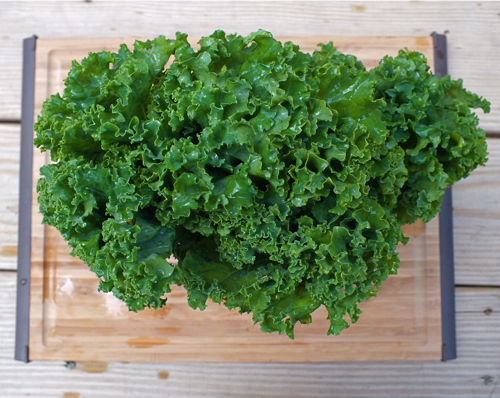
What's So Great About Kale?

{Nourish : October : Kale}
History: Kale was cultivated by both the ancient Greeks and Romans and is believed to have been brought to Britain by either the Celts or the Romans.
What's Inside
An Abundance Of
 Vitamin K (in the form of carotenoids) - Vitamin A - Vitamin C 
Manganese - Dietary Fiber
A Very Good Source Of
Copper - Tryptophan - Calcium - Vitamin B6 - Potassium 
A Good Source Of
Iron - Magnesium - Vitamin E - Vitamin B12 - Protein - Vitamin B1
Folate - Phosphorous - Vitamin B3


Other Health Benefits: Kale, as you can probably gather from the long list above of nutrients it contains, is one of the most nutrient-dense foods. Among some of its other health benefits are the following.
  • Antioxidant and Anti-Inflammatory Benefits: "In addition to conventional antioxidants like Vitamin C, Beta-Carotene, and Manganese, kale also provides us with at least 45 different recently discovered flavonoids, many of which are known to function as both antioxidants and anti-inflammatory compounds."
  • Cancer-preventing: Kale is also a top food source for at least 4 Glucosinolates, which after digestion can be converted by the body into cancer preventive compounds. 
Read more about the health benefits of Kale here.


All in the Family: Kale is in the same vegetable family as broccoli, cabbage, cauliflower, kohlrabi, and brussels sprouts.

In Season: Late Fall-Winter. Available in grocery stores year round.

Buying: Look for bunches with deep, vibrant color that are wilt free, with thick, sturdy stems. Leaves should be free from browning, yellowing and small holes.

Storing: Fresh, unwashed kale keeps best refrigerated in a plastic bag, and should be used within a few days after purchasing.

Eating: Rinse leaves under cold running water to clean.

This month we'll be bringing you some easy and delicious kale recipes.

{Nourish is our monthly series on learning about and using amazing foods.}

Friday, September 28, 2012

Warm Apple Crisp

{nourish : September : apples}
It's time for an apple recipe, and this one is my favorite!

Warm Apple Crisp


Filling Ingredients:
4-5 Granny Smith apples, peeled & diced into 1" cubes
1/2 cup sugar
2 Tbsp honey
1 Tbsp lemon juice
pinch nutmeg
1 tsp cinnamon

Crisp Topping Ingredients:
1 1/2 cups rolled oats
3/4 cup light brown sugar
1/2 cup flour
1 tsp cinnamon
1/2 tsp salt
1 stick butter, melted

Preheat oven to 375. Toss all filling ingredients in 8x8 baking dish (or in a mixing bowl, and then transfer to a baking dish). Combine all dry topping ingredients and mix well. Add melted butter and stir until moist. Spread topping evenly over apple mixture. (I don't usually use all of it.)

Bake 30-45 minutes until apples are tender and topping is lightly browned and crunchy. 

I love to serve it warm with vanilla ice cream.
 Do you have a favorite apple recipe? I'd love to hear about it.

Monday, September 24, 2012

Apple Tasting

{Nourish : September : Apples}
: A Family Apple Tasting :
A Little Guide to Common Grocery Store Apple Varieties

Ever wonder about all those different kinds of apples piled in the grocery store aisle? How different are they? Which type is best for apple pie? For eating with lunch? Well, in this month of apple abundance, we wondered about these things, and decided to do a little research on the subject, and compare some apples for ourselves.
We made a quick trip to our local grocery store where there were about 12 apple varieties available, but we limited our tasting to 8 of those. We bagged up 2 of each variety, and I made a little inward wish that the cashier wouldn't silently be cursing us for all the separate codes that would have to be keyed in at checkout. 

Here are our observations, along with some general info about each apple type.

McIntosh
We described these as: Sweet and a little sour, bright white flesh with a mealy texture
Descriptives from other sources: Simple flavor, sweet with a bit of acidity
Uses: Good for baking and snacking
History: Introduction in the 1820s, originated in Ontario, Canada

Braeburn
We described these as: Very soft, grainy texture, sweet with a bit of a bitter aftertaste
Descriptives from other sources: Crisp, without being hard; very juicy; high-impact, sweet-tart flavor
Uses: Great for snacking and baking
History: Introduction to market in 1952, originated in New Zealand

Honeycrisp
We described these as: Crunchy, crisp, tart and juicy, with a good balance of sweet and sour
Descriptives from other sources: Crisp and juicy; sweet yet slightly tart flavor; juicy and instantly refreshing
Uses: Great for snacking and salads, good for baking
History: Introduction to market in the late 1990s, originated at the University of Minnesota

Golden Delicious
We described these as: Sweet, crunchy, with muted flavors
Descriptives from other sources: Mellow and sweet
Uses: A true all-purpose apple; great for snacking, salads, cooking and baking
History: Introduction to market in 1914, originated in West Virginia 
Granny Smith
We described these as: Very sour, crisp, crunchy at first bite, then kind of chewy
Descriptives from other sources: Extremely tart, acidic, crisp, juicy
Uses: A versatile apple, Granny Smiths are excellent for baking, snacking and salads
History: Introduction to market in 1868, originated in Australia

Gala
We described these as

: Sweet, juicy, good initial crunch, less immediate flavor than others

Descriptives from other sources

: Crisp, aromatically sweet and snappy, though the best of these qualities is often not found in supermarket apples that have traveled from other countries

Uses

: Best for snacking and salads

History

: Introduction to market in 1965, originated in New Zealand


Red Delicious
We described these as

: Very mealy with tough, thick skin; mildly sweet; overall rather flavorless

Descriptives from other sources

: Crunchy with sweet, very mild flavor; skin can be quite tough

Uses

: Snacking and salads, not well suited for baking

History

: Introduction to market in 1874, originated in Iowa


Cripps Pink (also known as Pink Lady®)
We described these as

: Very sweet, well-rounded flavor; firm and juicy

Descriptives from other sources

: Firm, crisp flesh with a unique, tangy-tart, sweet flavor

Uses

: Best for snacking, can also be used for baking

History

: Introduction to market in 1985, originated in Australia


So, now that you know a little more about these apples,
here are our conclusions for snacking:


Unanimous Favorite: Honeycrisp
Unanimous Least Favorite: Red Delicious

Have you ever done an apple tasting (It's a fun idea if you haven't!), or do you have a favorite apple? 

Sources of apple information: Orange Pippin and Washington Apples

Friday, September 21, 2012

All About Apples

{Nourish : September : Apples}
History: Archeology shows us that humans were eating apples as early as 
6500 B.C. That's about 4000 years before the Egyptian Great Pyramid in Giza was built. What also happened around this time period? The cow was first domesticated in the Middle East, and humans mostly lived in small hunting-gathering tribes scattered across the globe. 

Crab apple trees are the only native apples to the US. Cultivated apple varieties were brought to America by Europeans nearly 400 years ago, followed not long after by shipments of honey bees to pollinate newly planted orchards. 
What's Inside:
Vitamin C - Fiber - Vitamin A - Calcium - Phosphorous
Potassium - Folate - Iron - Antioxidants
Plus small amounts of Magnesium, Copper, Zinc, Vitamins B1, B2, B6, E, K, & Niacin

In Season: The majority of apples are ripe for picking September-October. They are available year-round in grocery stores.

(Seasonal Fun: We look forward every Fall to a Saturday afternoon spent at a local orchard where we pick apples, buy cups of hot cider & more cider to take home, and wait in a long line for the most mouth-watering apple cider donuts EVER. )
Buying: Not much of a mystery to this. They are readily available at grocery stores. Check to make sure they have good color, and don't have bruises, cuts, or soft spots. 

Organic vs. Non Organic: Apples are regularly listed as one of the top fruits/vegetables contaminated by pesticides, and most regular grocery store apples are also coated with wax to make them look shiny and appealing. For both of these reasons apples are invariably on the recommended lists of produce items to choose if you're choosing a few fruits/vegetables to buy organic. Especially if you can't/don't buy organic, be sure to wash apples well by rubbing under running water.
Storing: Apples keep best in the refrigerator, preferably in the crisper drawer.

Eating: Keep the skin on! Most of the fiber and Vitamin C in an apple is located in or just below the skin.

Varieties: There nearly 7500 varieties of apples worldwide, but only about 100 of these are produced commercially in the US. I don't know about you, but my local grocery store has about 12 types, and we get to sample a few more unusual varieties when we make our annual orchard trip in the Fall.
Stay tuned for next week when we share our observations from a family tasting of 8 apple varieties!

{Nourish is our monthly series on learning about and using amazing foods.}


Related Posts Plugin for WordPress, Blogger...